Moong Dal (Green Gram)
Moong is the most digestible of the dals, sold three ways: whole (sabut) for sprouts, split-with-skin (chilka) for khichdi, and skinned-and-split (dhuli) for the lightest yellow dal and cheela.
Buy Moong Dal
Moong Dal in Indian languages
| Language | Name | Pronounced |
|---|---|---|
| English | Green gram / mung bean | mung bean |
| Hindi | मूंग | Moong |
| Tamil | பாசிப்பயறு | Pasi payaru |
| Telugu | పెసలు | Pesalu |
| Kannada | ಹೆಸರು ಕಾಳು | Hesaru kalu |
| Malayalam | ചെറുപയർ | Cherupayar |
| Marathi | मूग | Moog |
| Bengali | মুগ ডাল | Mug dal |
| Gujarati | મગ | Mag |
| Punjabi | ਮੂੰਗੀ | Moongi |
How to cook it
- Soak
- Dhuli: none. Chilka: 15 min. Sabut: 1–2 hours or overnight for sprouts
- Pressure cooker
- Dhuli 2–3, chilka 3, sabut 4–5 (typical)
- Water ratio
- 1 cup dal : 2.5–3 cups water
- Stovetop
- Dhuli ~15–20 min; sabut ~40 min
Dhuli moong is the quickest dal there is — ready without soaking.
Nutrition per 100 g
| sugar | 1 g |
|---|---|
| energy | 348 Kcal |
| protein | 25 g |
| carbohydrate | 63 g |
Indicative values for the dry pulse; cooking changes them.
Storage
Airtight and dry; whole moong keeps best for sprouting when fresh.
Cook it tonight
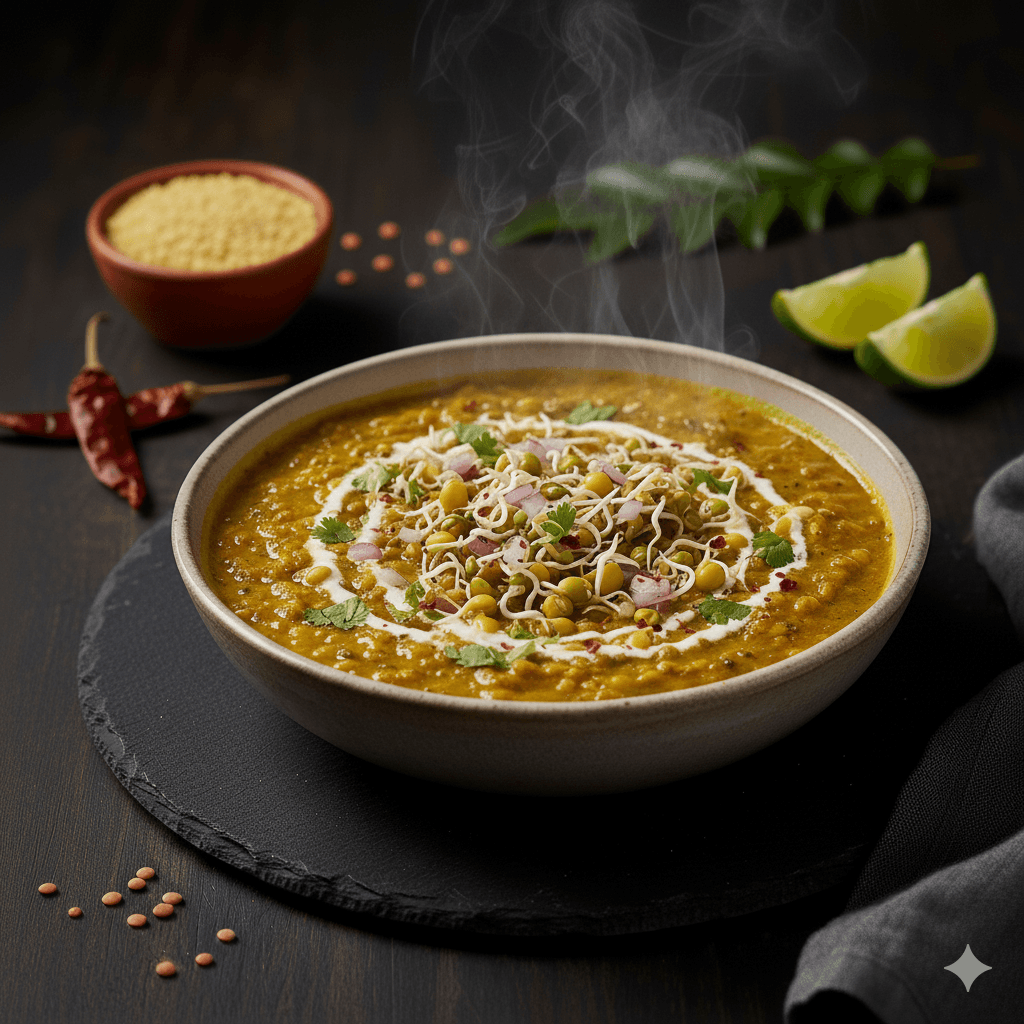 Healthy & VeganMixed Dal Sprout CurryA highly nutritious vegan curry made from mixed sprouted lentils and spices.Prep 10 mins · Cook 25 mins · Serves 4
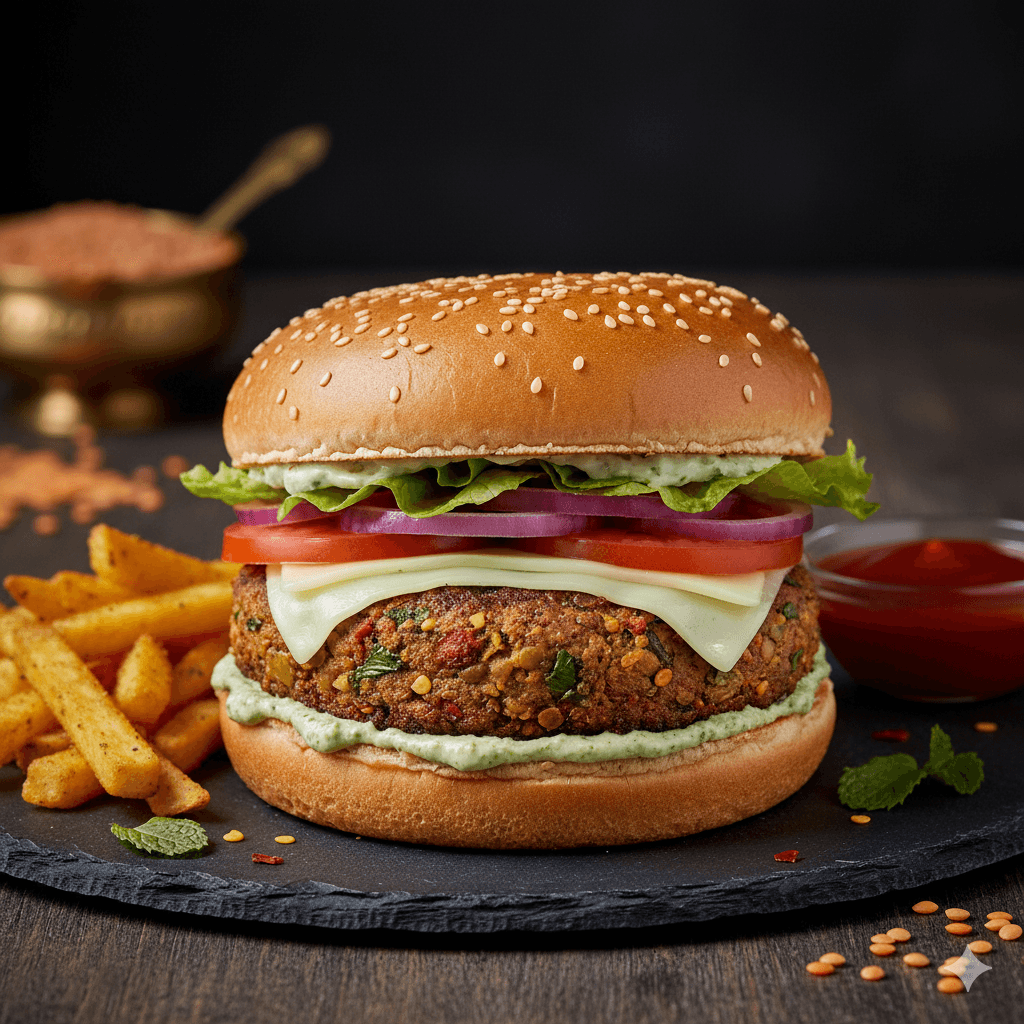 Modern & FusionDal Burger PattyHealthy and flavorful moong or masoor dal patties for delicious homemade burgers.Prep 15 mins · Cook 15 mins · Serves 4 Patties
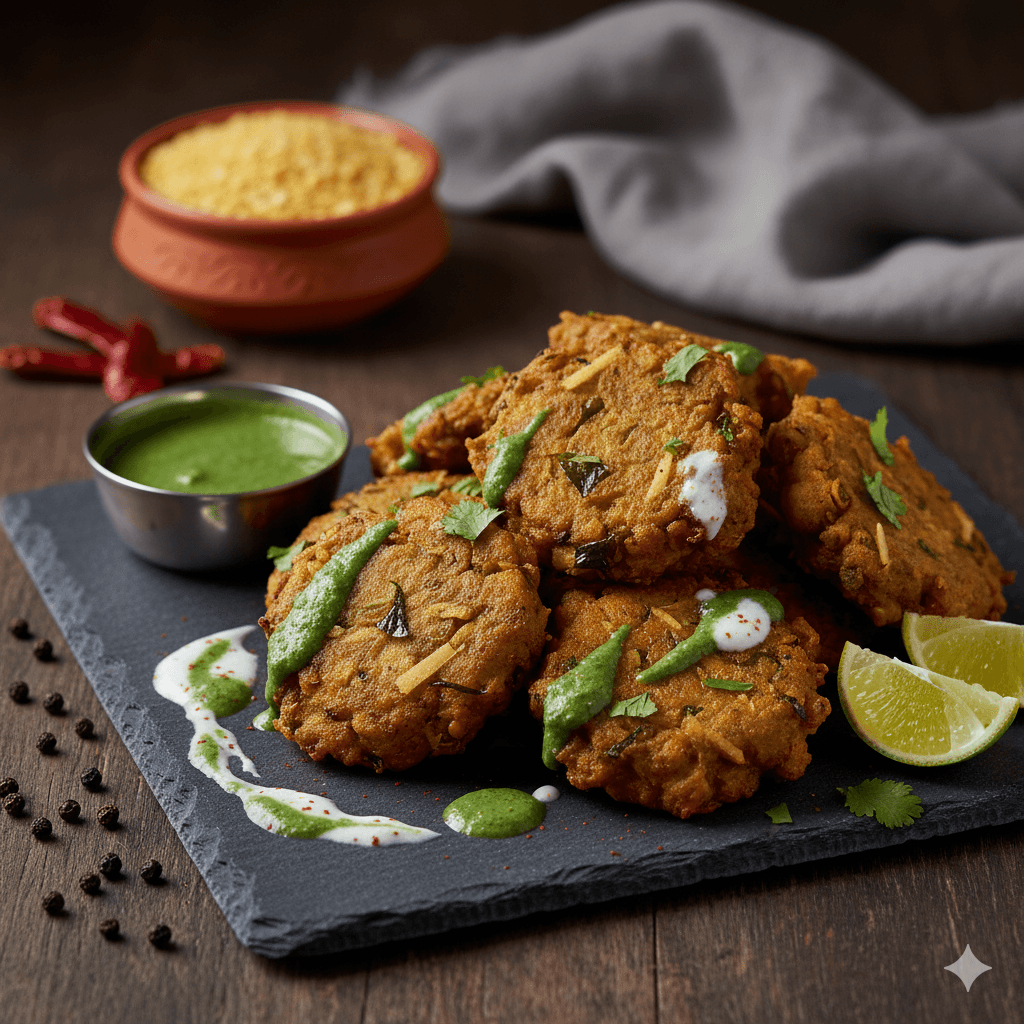 Chaat & SnacksMoong Dal PakodaIconic crispy fritters made from moong dal, perfect for a rainy day.Prep 2 hours soaking · Cook 20 mins · Serves 4
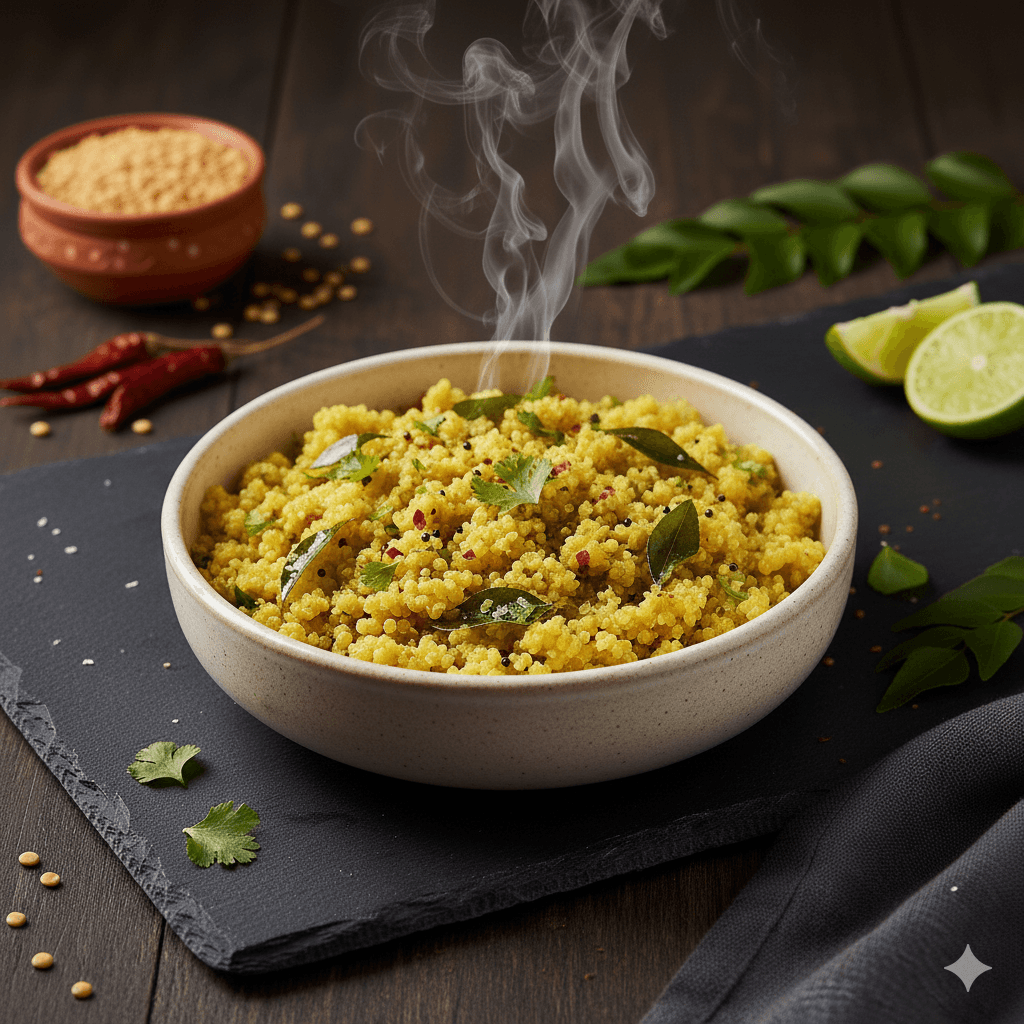 Healthy & VeganQuinoa Dal BowlA complete superfood meal bowl with high-protein quinoa, dal, and fresh greens.Prep 10 mins · Cook 20 mins · Serves 2
Common questions
- What is the difference between moong sabut, chilka and dhuli?
- Sabut is the whole green bean, chilka is split with the green skin on, and dhuli is skinned and split (yellow). Dhuli cooks fastest.
- What is moong dal in English?
- Green gram, also called mung bean.
- Which moong is best for khichdi?
- Dhuli moong for a soft, light khichdi; moong chilka if you want a little more fibre and texture.